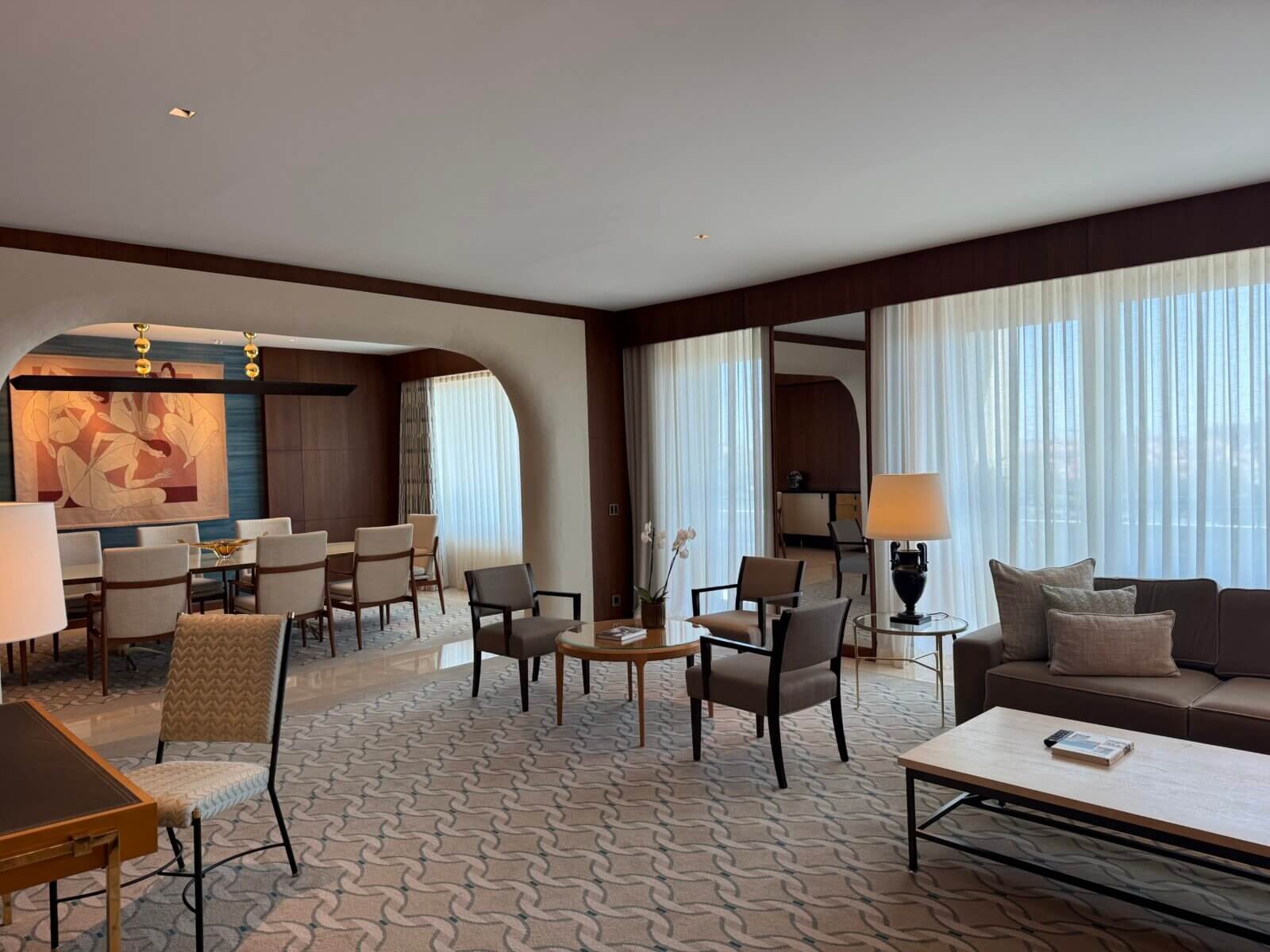
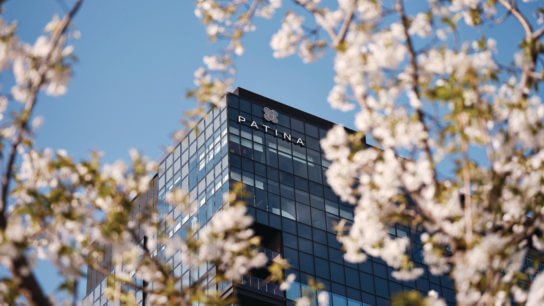
Lisbon’s Four Seasons Hotel Ritz goes beyond the perfected formulas of understated luxury, characteristic of the Four Seasons brand, to bring something very special and rather particular. A jewel of Portuguese mid-century modernism, the hotel is as much an art museum as a place to stay, housing one of the most significant private collections of mid-20th-century Portuguese art in the country. A unique invitation to step into a Lisbon of another time, somewhere between the 1950s and the 1970s, materializing a cosmopolitan post-war dream of refinement and independence.
Art at Four Seasons Hotel Ritz Lisbon, one of the country’s largest and most important privately-owned collections of mid-twentieth-century Portuguese art.
From Salazar’s Vision to National Treasure
The hotel was born of a grand idea in 1952, initiated by Portugal’s then-prime minister, António de Oliveira Salazar, who sought a modern hotel that would represent Portugal to the world. Entrusting the concept to Ricardo Espírito Santo Silva, a champion of national heritage, the vision was to build not only a luxury hotel, but a space that honoured Portuguese culture in both material and spirit.
Despite the early deaths of Silva and architect Porfírio Pardal Monteiro, the project was shepherded to completion by Queiroz Pereira, whose son, Pedro Mendonça de Queiroz Pereira, still plays a role in preserving its legacy. When it opened in 1959, the Ritz was a tribute to Portuguese craftsmanship, its architecture wrapped in 40,000 square metres of rare marble, and its interiors designed by the famed French decorator Henri Samuel, blending art deco with Louis XVI flair.
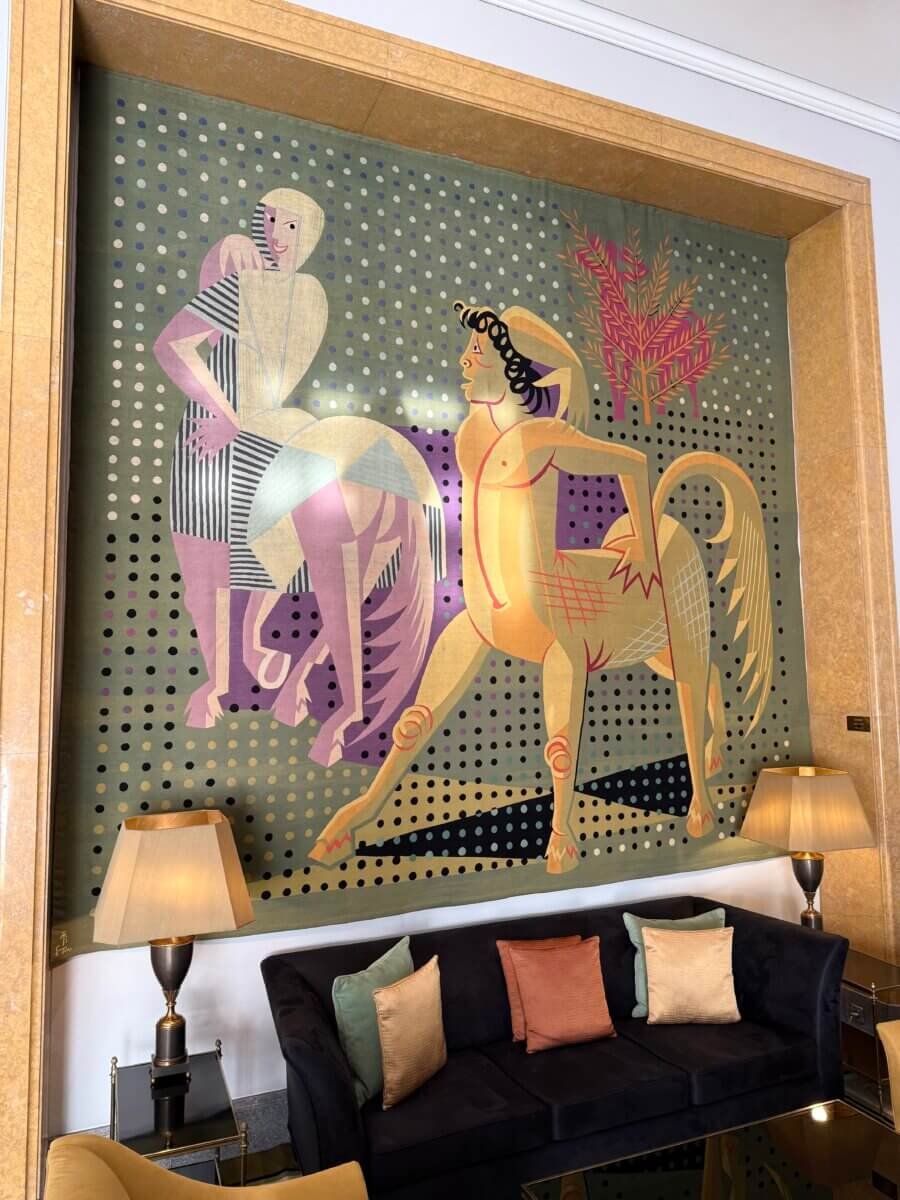
Almada Negreiros Centauros trilogy
A Celebration of Art
The Four Seasons Lisbon transcends decorative art placed to suit a brand identity, featuring original, site-specific works created by some of Portugal’s most celebrated modern artists. It is a living archive of a pivotal moment in Portuguese cultural history.
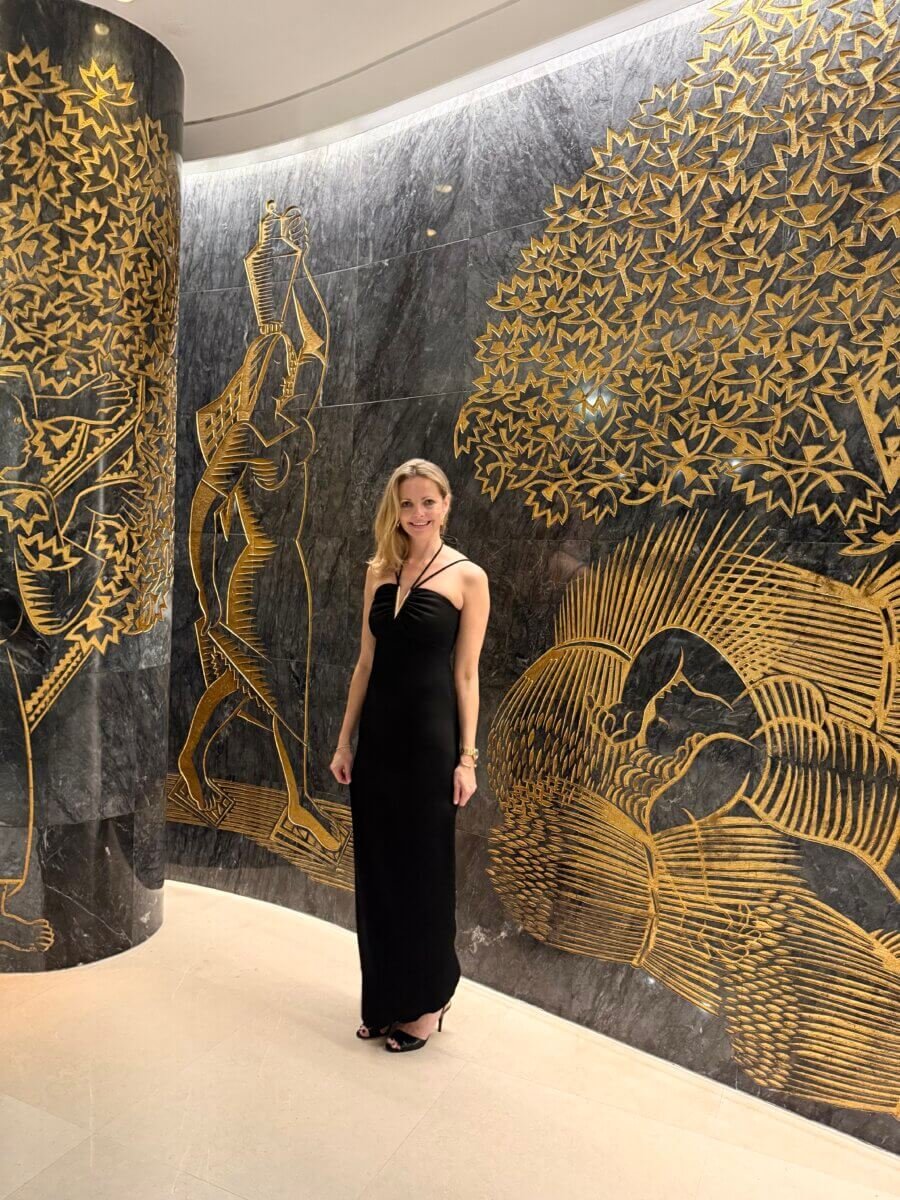
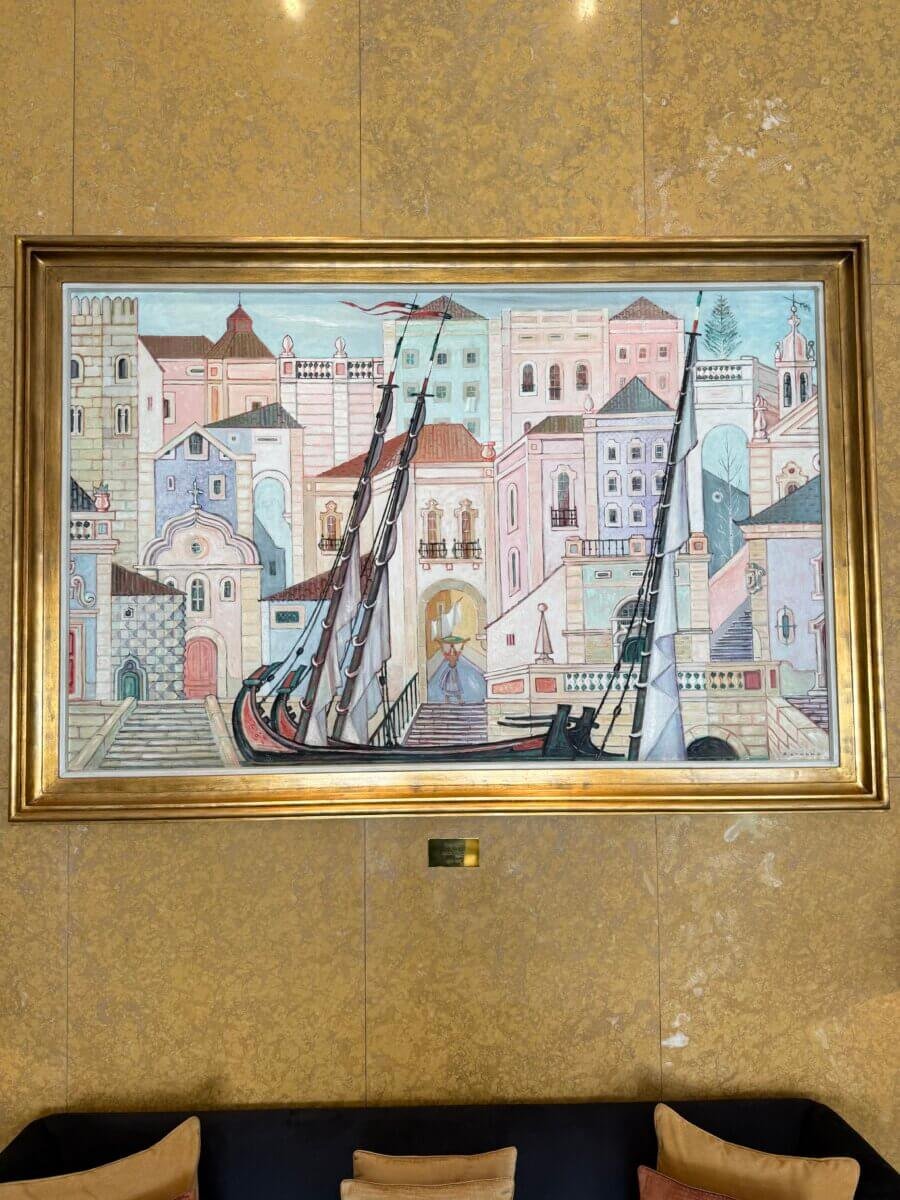
In the main lounge, Almada Negreiros’ “Centaur” trilogy of Portalegre tapestries commands attention. Inspired by Picasso and celestial forms, the figures are both geometric and mythic. Nearby, his marble mural A Ceifeira (The Harvest) is perhaps the hotel’s most iconic artwork. Complementing this is Carlos Botelho’s pair of oil paintings, Views of Lisbon and Boats on the Tagus, capturing the bustle and poetics of a city on the brink of modernity.
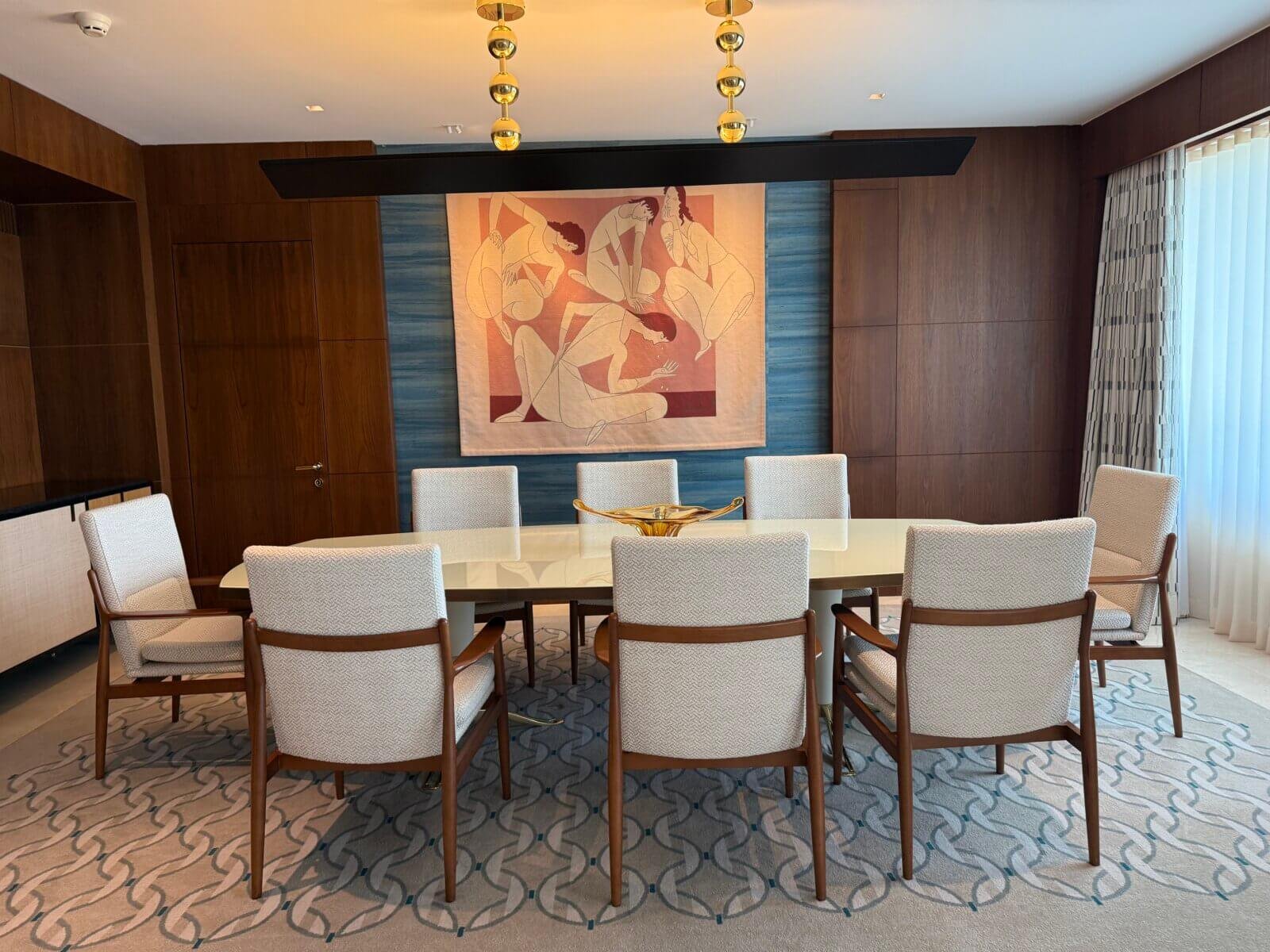
Elsewhere, Sarah Afonso’s tapestry As Quatro Estações (The Four Seasons) lends a fitting symbolic resonance, while Arnaldo Louro de Almeida’s mother-of-pearl inlaid mural “Bambús,” based on Pedro Leitão’s design, evokes elegant Eastern minimalism. There are ceramics by Querubim Lapa, tile interpretations by Estrela Faria, and monumental bronzes by Lagoa Henriques—including his famous Sea Horses at the Varanda Restaurant and the luminous conch light appliques in the lobby halls.
To guide the experience, the hotel provides an excellent iPad art app that functions as a personal curator.
Vistas de Lisboa by Carlos Botelho
CURA: A New Chapter in Portuguese Cuisine
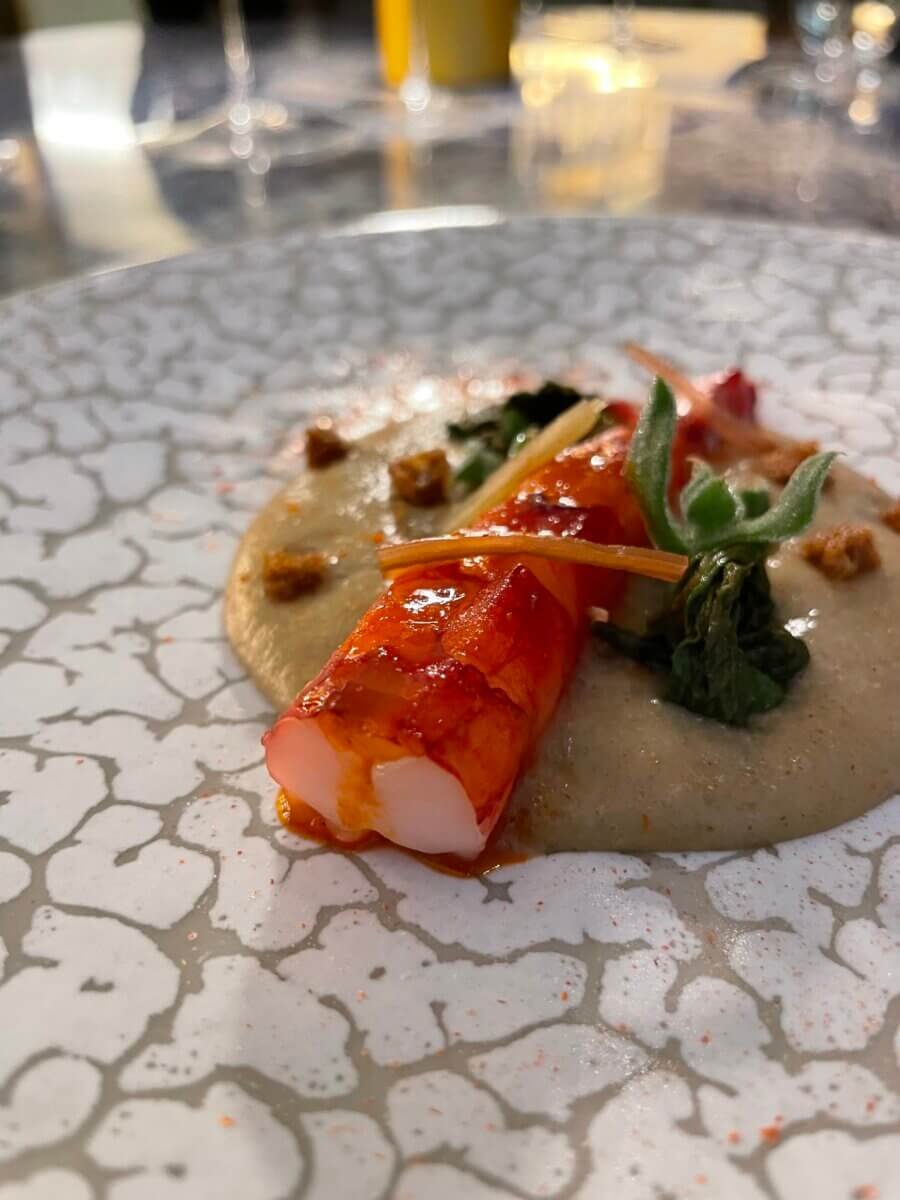
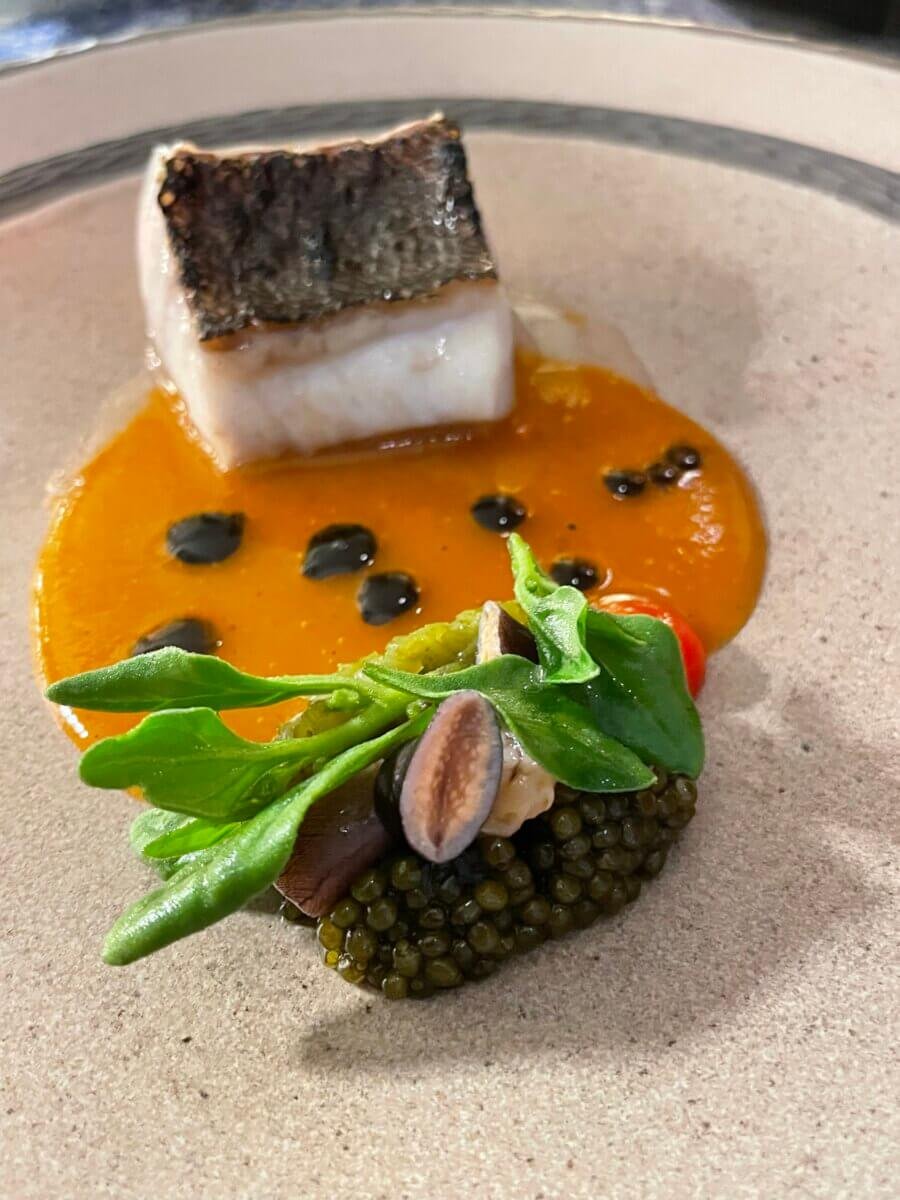
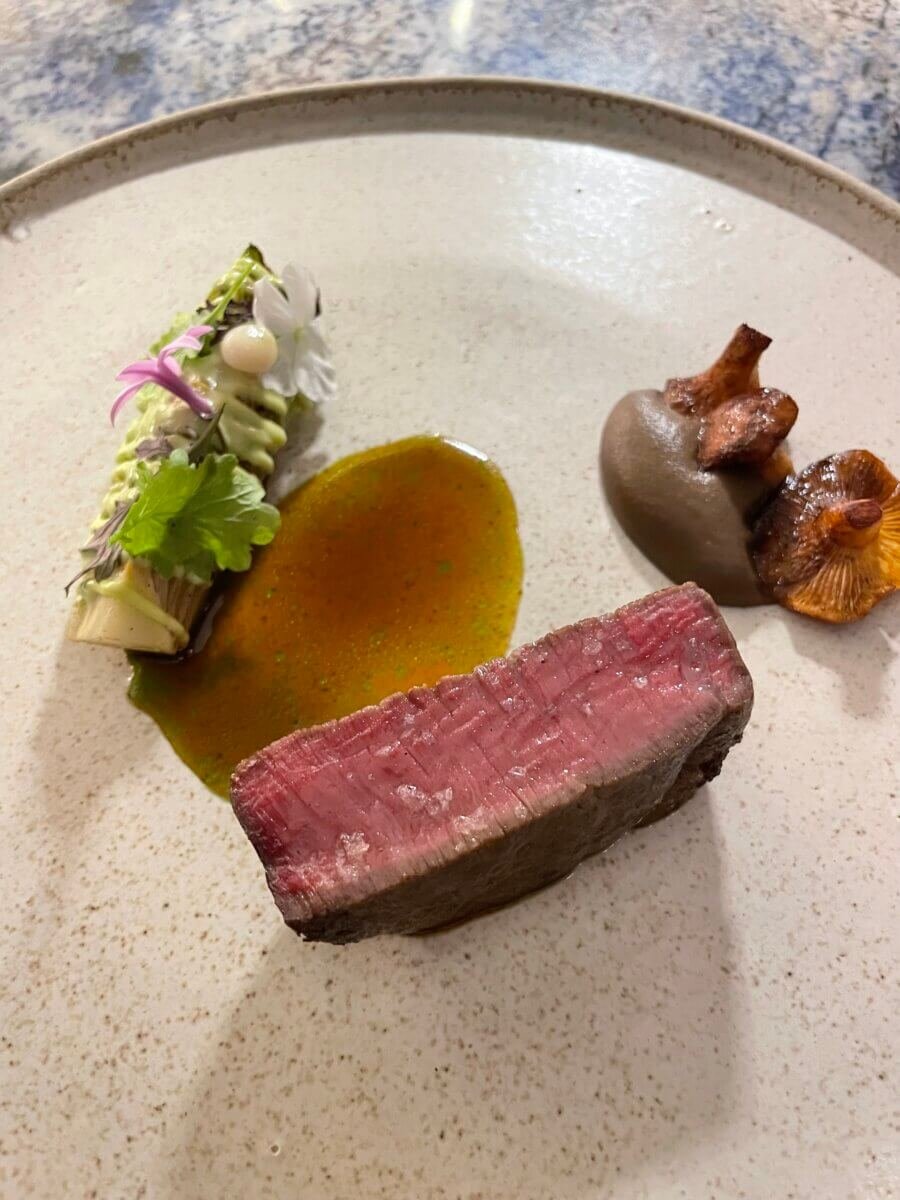
If the hotel is an archive of Portugal’s modernist past, CURA is its gastronomic future. Launched in 2020 and led by Lisbon-born chef Rodolfo Lavrador, the Michelin-starred restaurant is a rethinking of traditional Portuguese cuisine. Lavrador’s career has taken him from law school to kitchens in New York and London, before returning home to create a space that reflects both international technique and Portuguese soul.
Lavrador speaks of flavour memory and sustainability with equal ease. He works closely with small producers and local suppliers, sourcing the best seasonal ingredients and transforming them through what he calls a “curated” approach. Menus come in two versions—five or ten courses—and offer vegetarian pairings. The focus is on clarity, originality, and a strong narrative of place. A dish might begin with a familiar element—salted cod, for instance—and end with something astonishingly clean, elegant, and new. The kitchen’s commitment to zero waste and the integrity of the raw ingredient is both technical and ethical.
…and the Wines
The sommelier team, led by David Lopes, works in step with the kitchen. The wine pairings are not merely complementary—they are dialogic, often drawing from Portugal’s most exciting contemporary vineyards. CURA’s cellar privileges producers who share its values: integrity, originality, and finesse.
Even in a city of rising gastronomic stars, CURA stands out. Not only for its star, which it has retained consistently since opening, but for the emotion it elicits.
Dive into Unpretentious Elegance
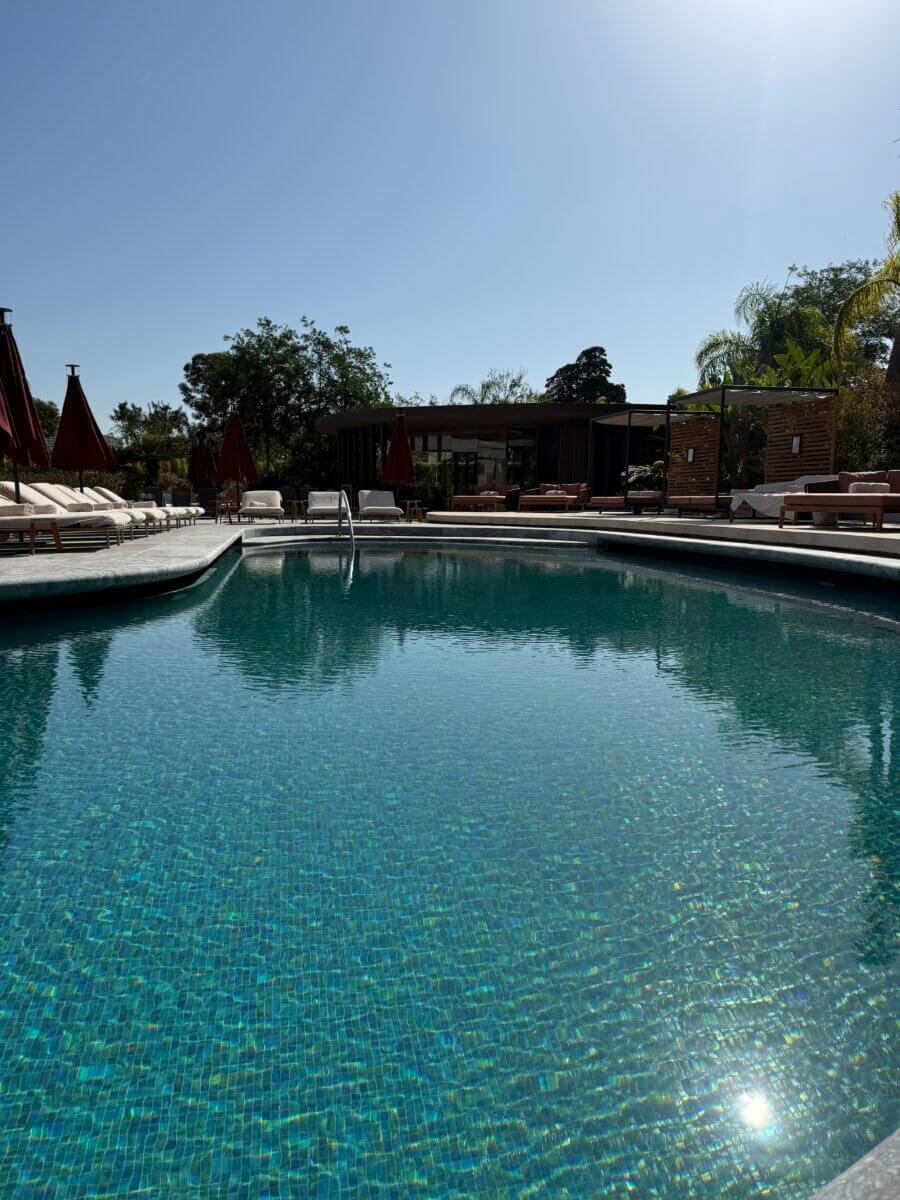
The hotel offers two swimming pools—one indoor, one outdoor. They are not theatrical set pieces, but spaces for real use, with excellent light, comfortable proportions, and an atmosphere that encourages laps and leisure alike. They form part of the hotel’s wellness offering but remain anchored in the tone of the property: understated, purposeful, and refined.
Preserving 20th-Century Originality
Though the hotel has undergone two major renovations since its debut, it has resisted the temptation to homogenize. Restoration has prioritised the integrity of the original 1959 vision, managed by Four Seasons since 1997, the Lisbon property retains a palpable individuality. The architectural bones, room proportions, and curatorial logic all remain intact.
The recent update balances contemporary needs with historical reverence. While furnishings have been subtly refreshed, many rooms still feature bespoke details from the hotel’s early days, including custom design variations that celebrate the post-war embrace of cosmopolitanism. There is no attempt to neutralise its Portuguese identity.
Not Just Perfect—Particular
From the moment you walk past A Ceifeira to your final bite at CURA, you feel enveloped in a certain kind of beauty. In a global portfolio known for excellence, this property offers something even rarer: a sense of meaning.