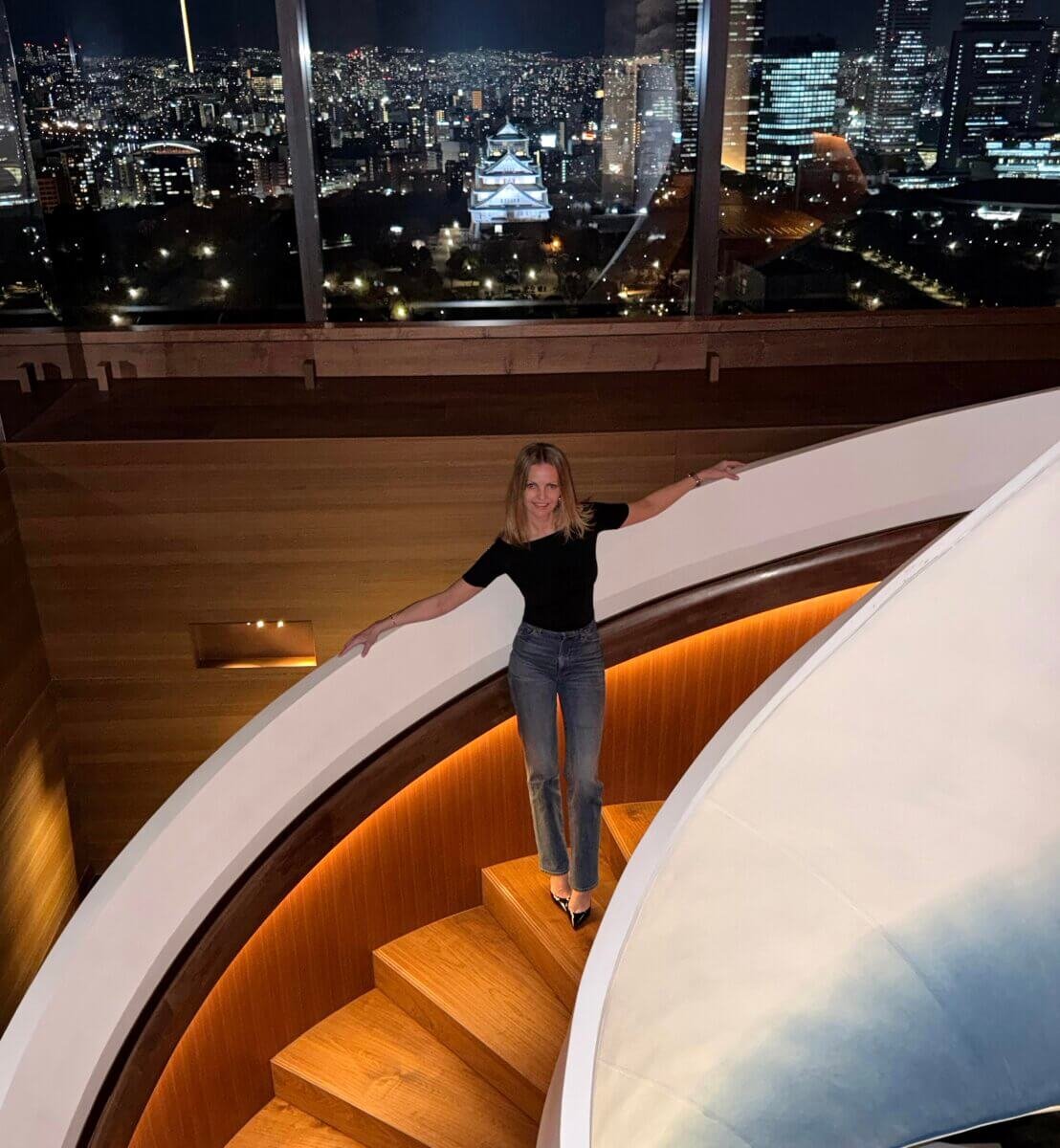
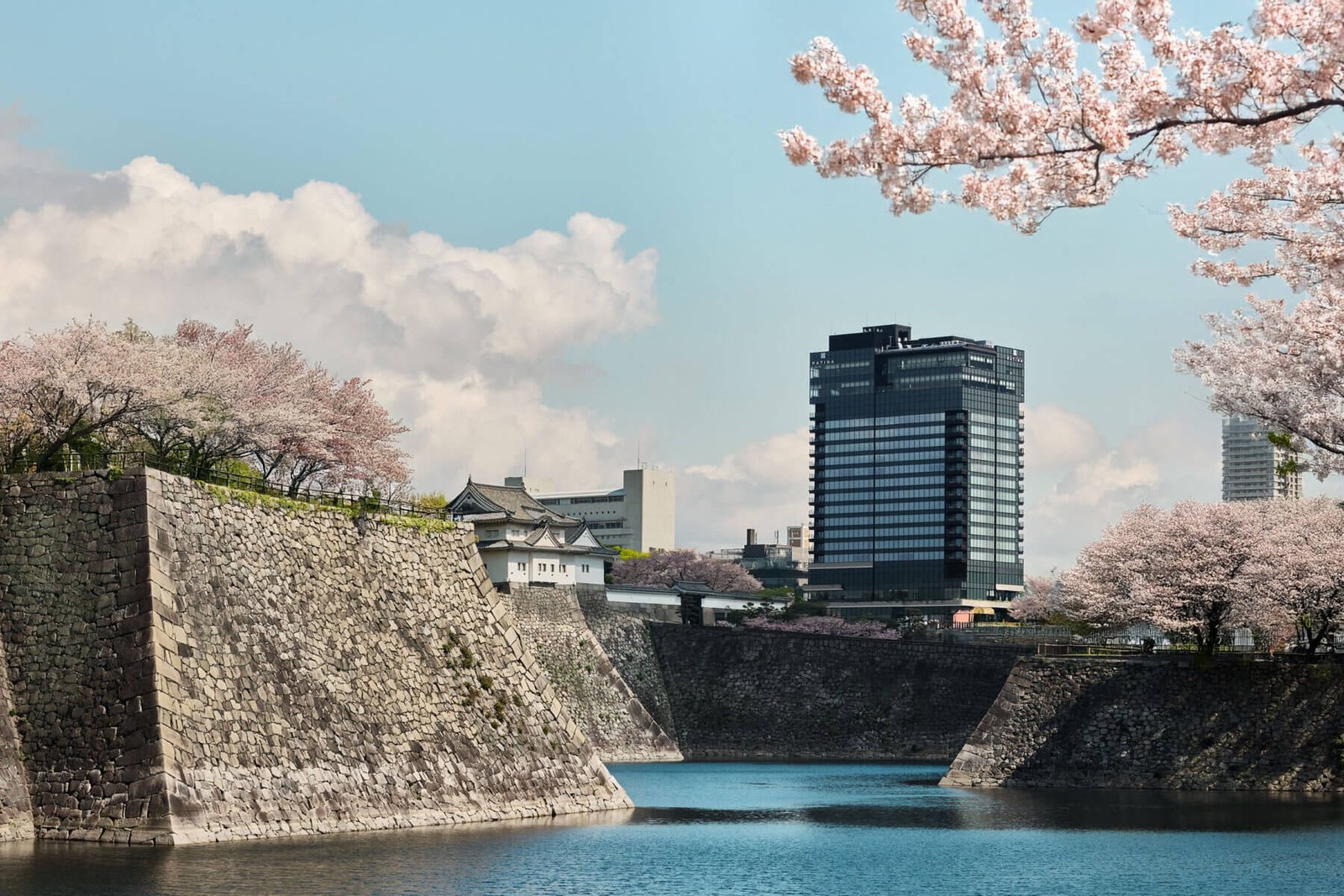
Osaka, Japan’s major port city on the island of Honshu, is commercially confident, known for its nightlife and generous street food. Energy defines it. Yet, a few minutes from Osaka Castle, Patina Osaka introduces a different tempo. The location is not incidental. The hotel sits within direct sightline of the castle, and from multiple vantage points, including its wellness sanctuary, the 16th-century structure, with its stone ramparts and layered moats, provides a constant and stirring visual reference.
The property is the first Japanese address from Patina Hotels & Resorts, a brand positioning itself as a global leader in transformative luxury. The stated ambition to foster connection to art, culture and community through destination-driven experiences. That ambition translates into coherence at Patina Osaka which feels more like a curated universe than a stay. The hotel integrates design, gastronomy, wellness and cultural reference into a total-emersive experience.
Photo by Patina Osaka
Design Rooted in Craft
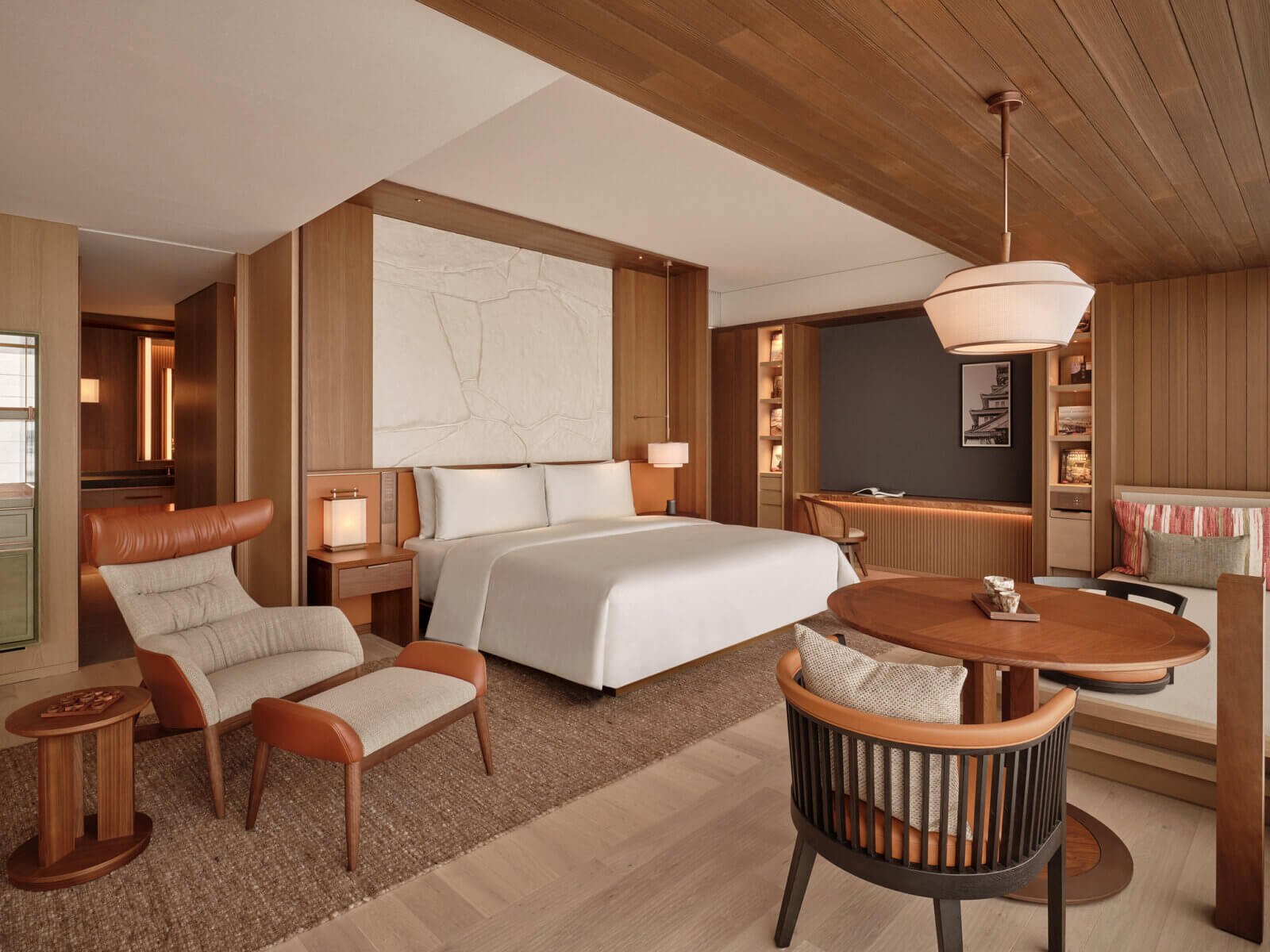
Comprising 221 rooms and suites, the hotel’s architecture draws explicitly on the legacy of Japan’s master craftsmanship, through material discipline: warm wood dominates circulation areas and guest rooms. Hand-finished plaster introduces subtle surface variation. Washi paper diffuses light, eliminating any possibility of harsh glare, while tone is used structurally and texturally to provide a magisterial softness that is uniquely Japanese.
Rooms are designed to maximise spatial clarity. Storage is integrated into architectural lines. Lighting is layered and indirect. Technology is present but discreet. From many rooms, Osaka Castle is clearly visible. The contrast between contemporary interior precision and historic stone architecture reinforces the hotel’s broader theme: tradition and modernity in stated parallel, each defiant, yet complementary.
Photo by Patina Osaka
P72: A Culinary Calendar of 72 Micro-Seasons
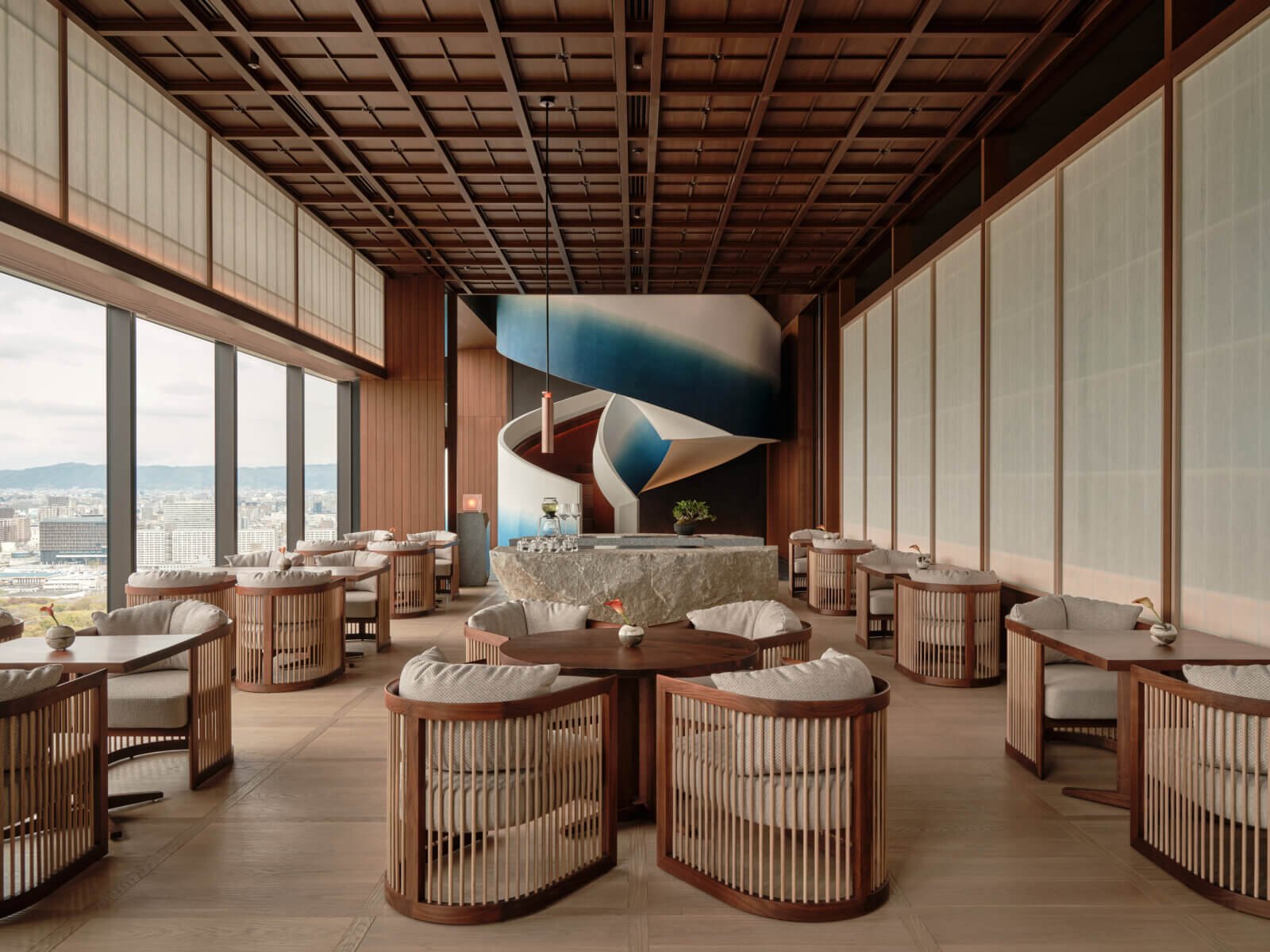
The central restaurant, P72, is structured around Japan’s traditional calendar of 72 kō — micro-seasons that divide the year into subtle ecological transitions. Rather than four broad seasonal categories, the system recognises 72 incremental changes in climate and nature.
This framework shapes the restaurant’s identity. On arrival, guests encounter a 52-metre sculptural installation, evoking root systems and crafted from reclaimed wood. The installation functions as both an architectural feature and conceptual anchor, referencing land and origin.
Cuisine at P72 is vegetable-led and fermentation-driven. The philosophy emphasises alignment to subtle changes. Each dish is guided by what nature offers in that specific micro-season. Vegetables are treated as primary rather than secondary components. Fermentation techniques, including aged miso, preserved grains and pickled mountain produce, introduce depth and complexity, while remaining delicate and subtle. I participate in a most insightful and interactive fermentation workshop, offered to guests wishing to engage more directly with technique and process. This extends the dining concept beyond consumption into education.
The restaurant terrace gives out onto a garden, growing various ingredients for the restaurant. The presence of cultivated greenery at the heart of the city supports both the hotel’s gastronomic positioning and the uniqueness of the overall offering. The pacing of the menu reflects the micro-season philosophy. Courses are structured on precision and progression.
Photo by Patina Osaka
Culinary Direction and Leadership
Culinary direction across the hotel is overseen by Executive Chef Antony Scholtmeyer, whose international background informs the broader gastronomic structure of the property.
At P72, sous chef Janniah Kaviraj plays a central role in shaping the vegetable-forward and fermentation-led programme. Kaviraj, of Indian heritage and with professional experience linked to the Maldives, contributes a global perspective while maintaining alignment with the restaurant’s Japanese seasonal framework.
The influence is subtle rather than dominant. Seasonality remains the anchor. Technique remains disciplined. The result is a restaurant that integrates international culinary experience within a distinctly Japanese temporal philosophy.
Photo by Patina Osaka
Barin: Teppanyaki on the 19th Floor
On the nineteenth floor, Barin provides a contrasting culinary environment.
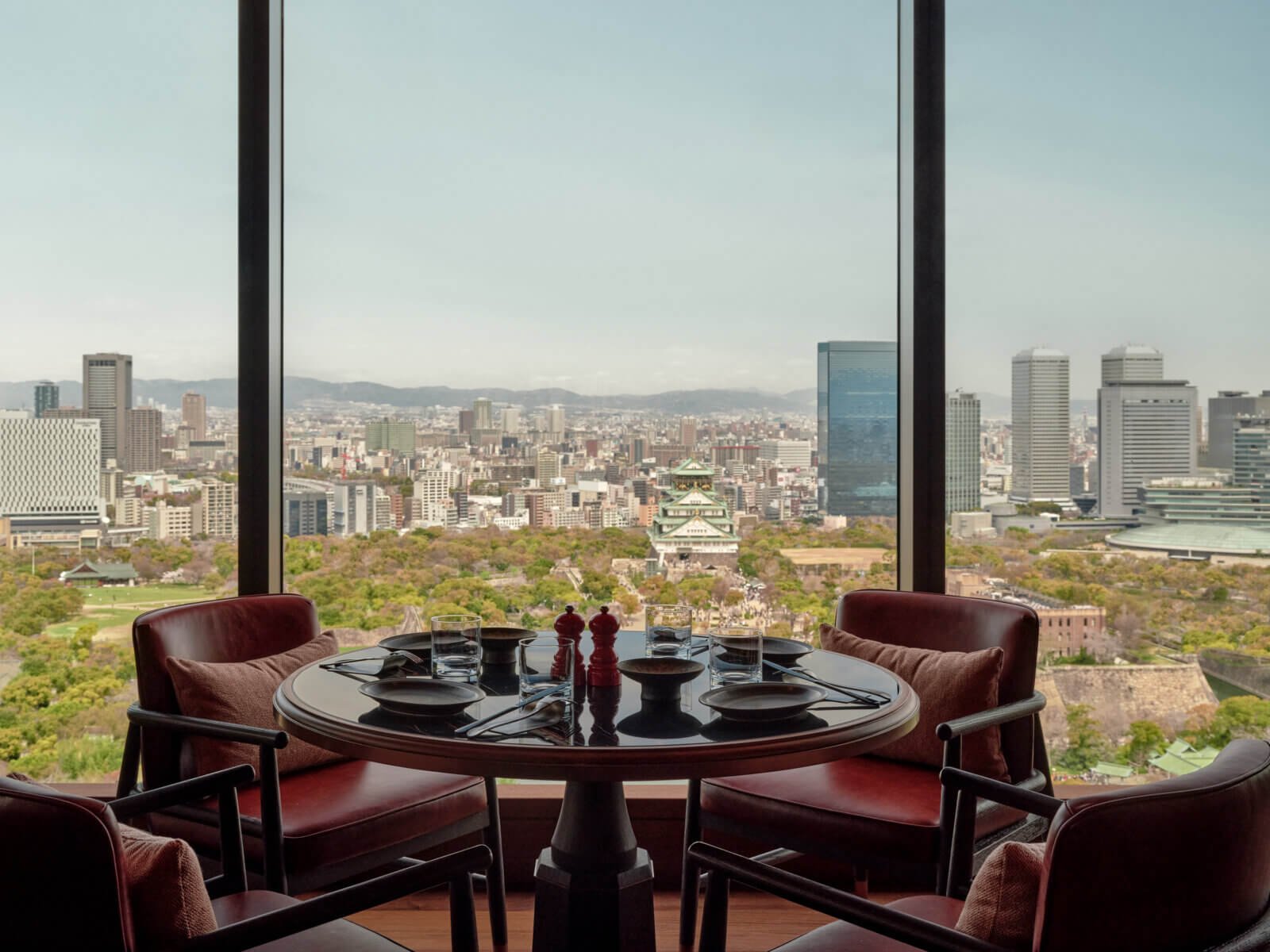
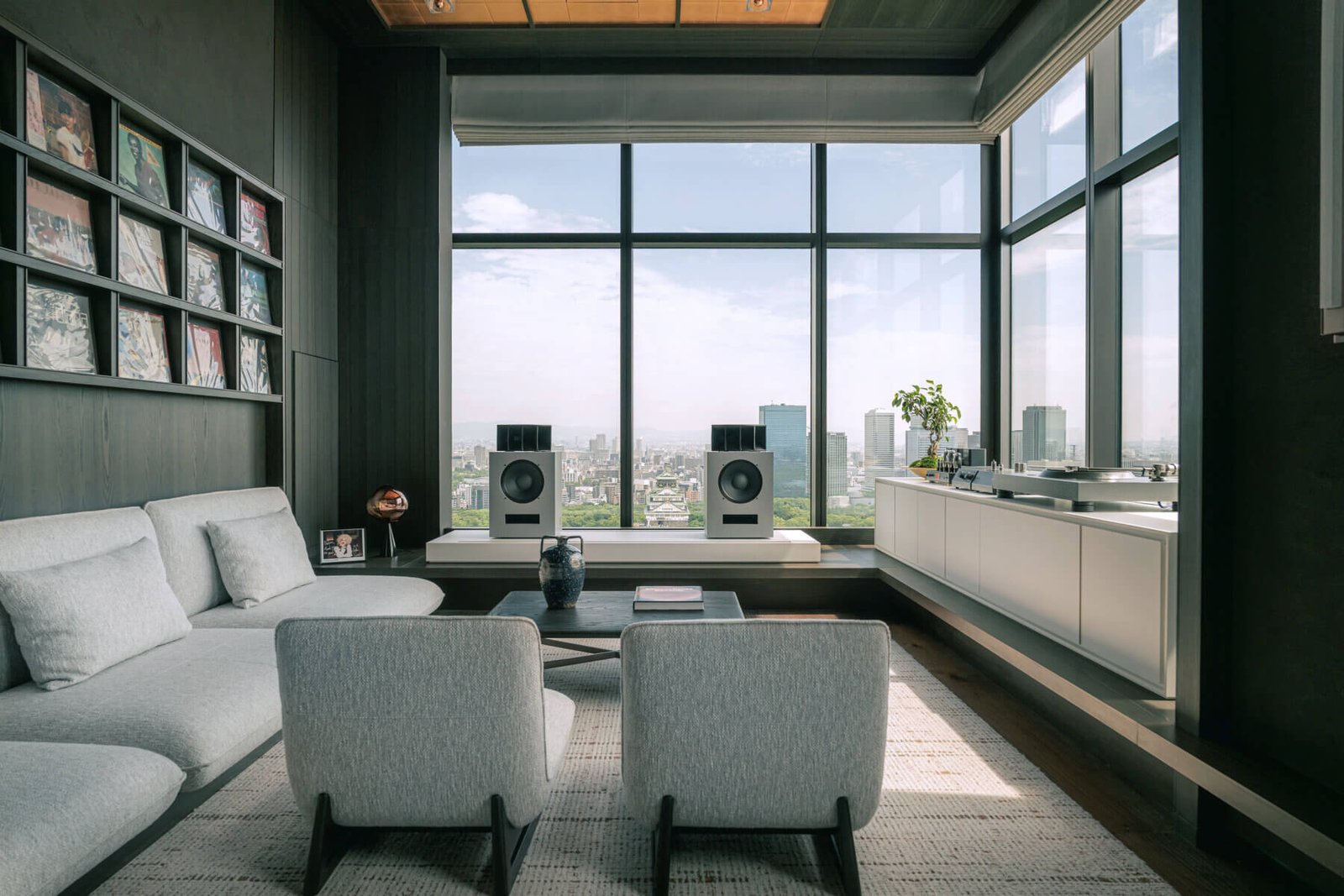
The restaurant offers wide views of Osaka’s skyline. Osaka Castle remains visible, reinforcing spatial continuity across the property. The teppanyaki experience takes place directly in front of guests: flame, steel and precision define the format. Premium seasonal ingredients sourced from across Japan are handled with controlled choreography. Movements are disciplined and economical. The performance element is structured rather than flamboyant.
With the skyline beyond and flame at the counter, Barin offers a more vertical and kinetic counterpoint to P72’s grounded seasonal focus.
Photo by Patina Osaka
Wellness with Direct Castle Views
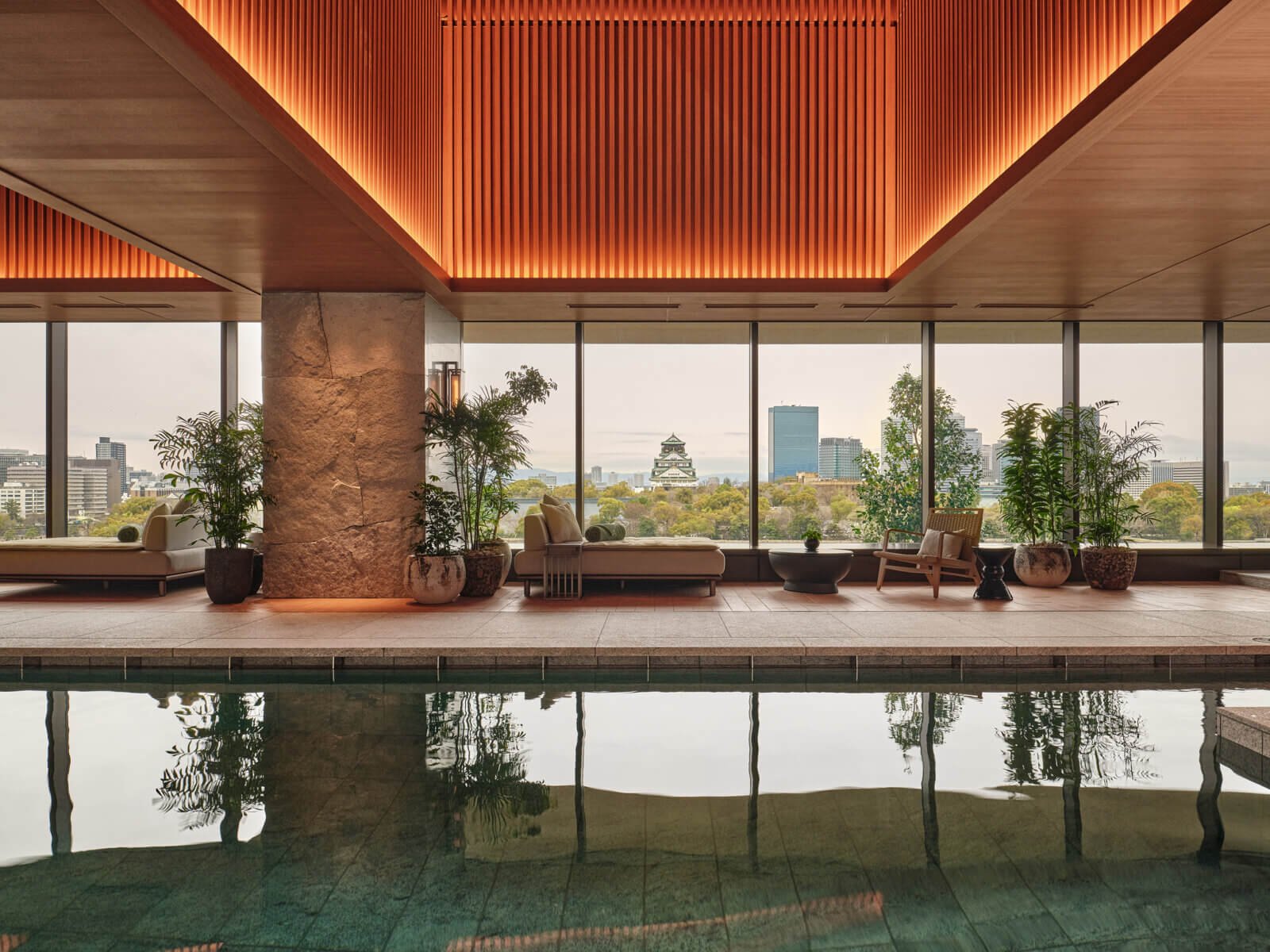
Patina Osaka’s wellness sanctuary spans approximately 1,400 square metres and directly faces Osaka Castle. The spatial alignment is deliberate. Guests engage in contemporary health optimisation while maintaining visual connection to one of Japan’s most significant historic landmarks.
Cryotherapy chambers offer three-minute post-exercise recovery sessions. Hyperbaric oxygen and hydrogen therapy aim to maintain healthy oxygen levels and restore the body’s natural balance. LED full-body treatment rooms focus on skin vitality and regeneration. Technogym Biostrength equipment integrates AI-driven systems for tailored performance assessment and training.
This is explicitly state-of-the-art HealthTech embedded within a historically breathtaking location.
The interior manages to avoid medical sterility, often associated with technology-driven spa treatments. Wood and stone temper the technological features. The indoor pool is bathed in natural light, with direct views toward the castle. This visual connection reinforces continuity between past and present forms of discipline and restoration.
Photo by Patina Osaka
Immersive Structure
Master craftsmanship, advanced HealthTech, a working garden, vegetable-based micro-season gastronomy, fermentation education, teppanyaki linked to samurai heritage, and direct castle views from both rooms and spa. While such layering could easily feel thematic or fragmented, the experience remains coherent: a universe apart.
The property positions itself as transformative luxury. In Osaka, that transformation is structured rather than emotional. It lies in precision: of materials, of seasonality, of technique, of health optimisation.
In a city defined by pace and density, Patina Osaka offers subtle recalibration.