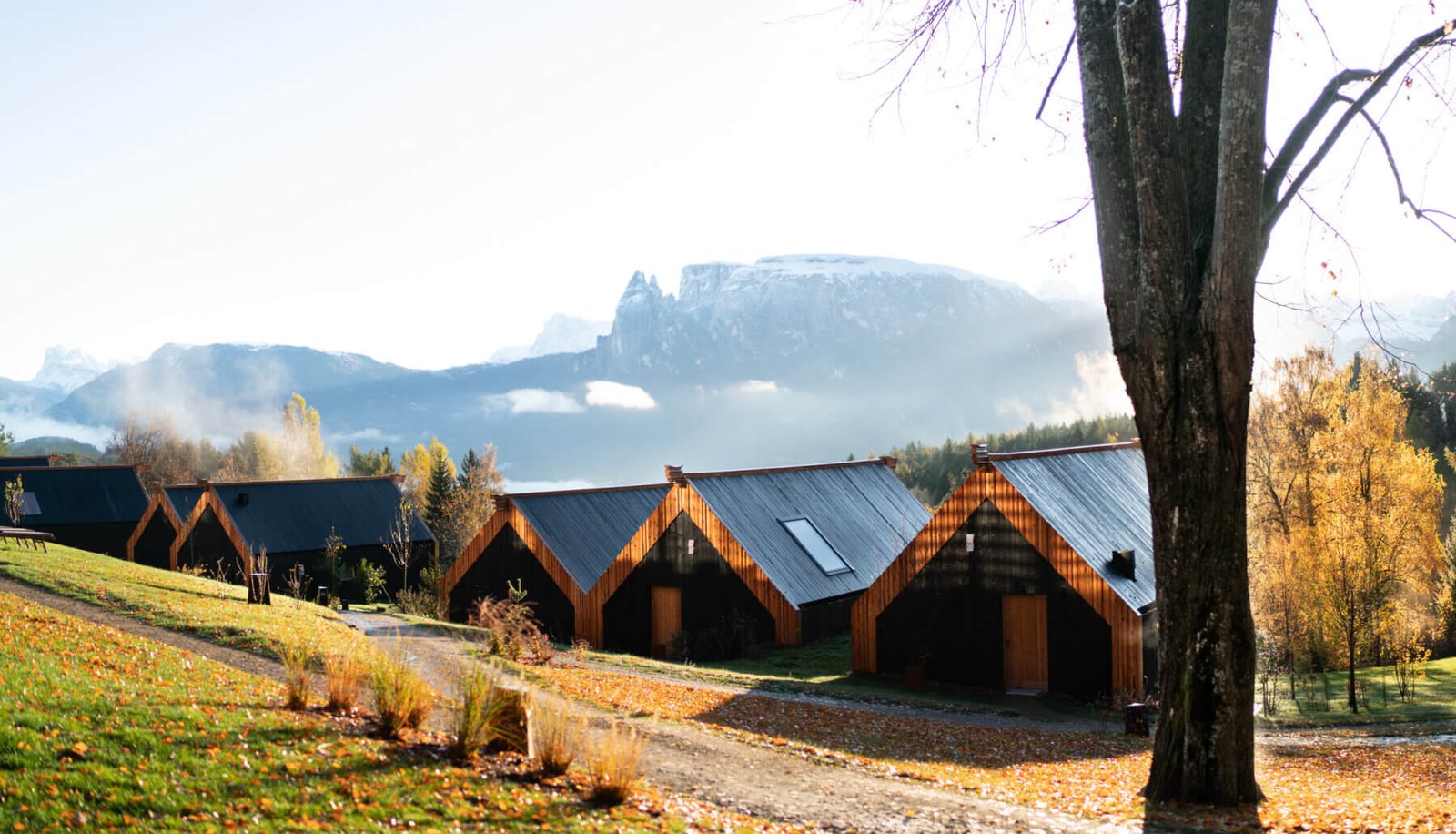
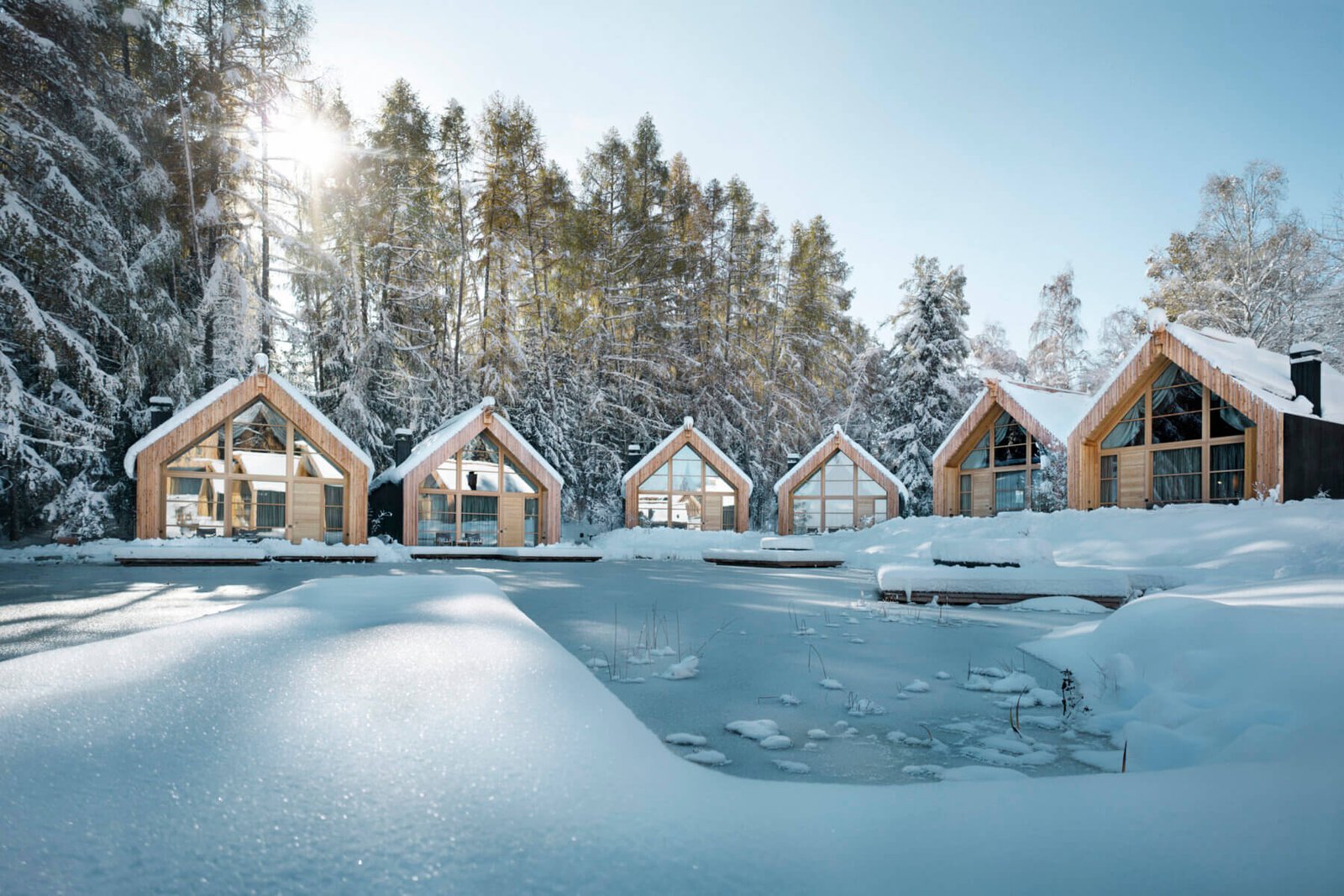
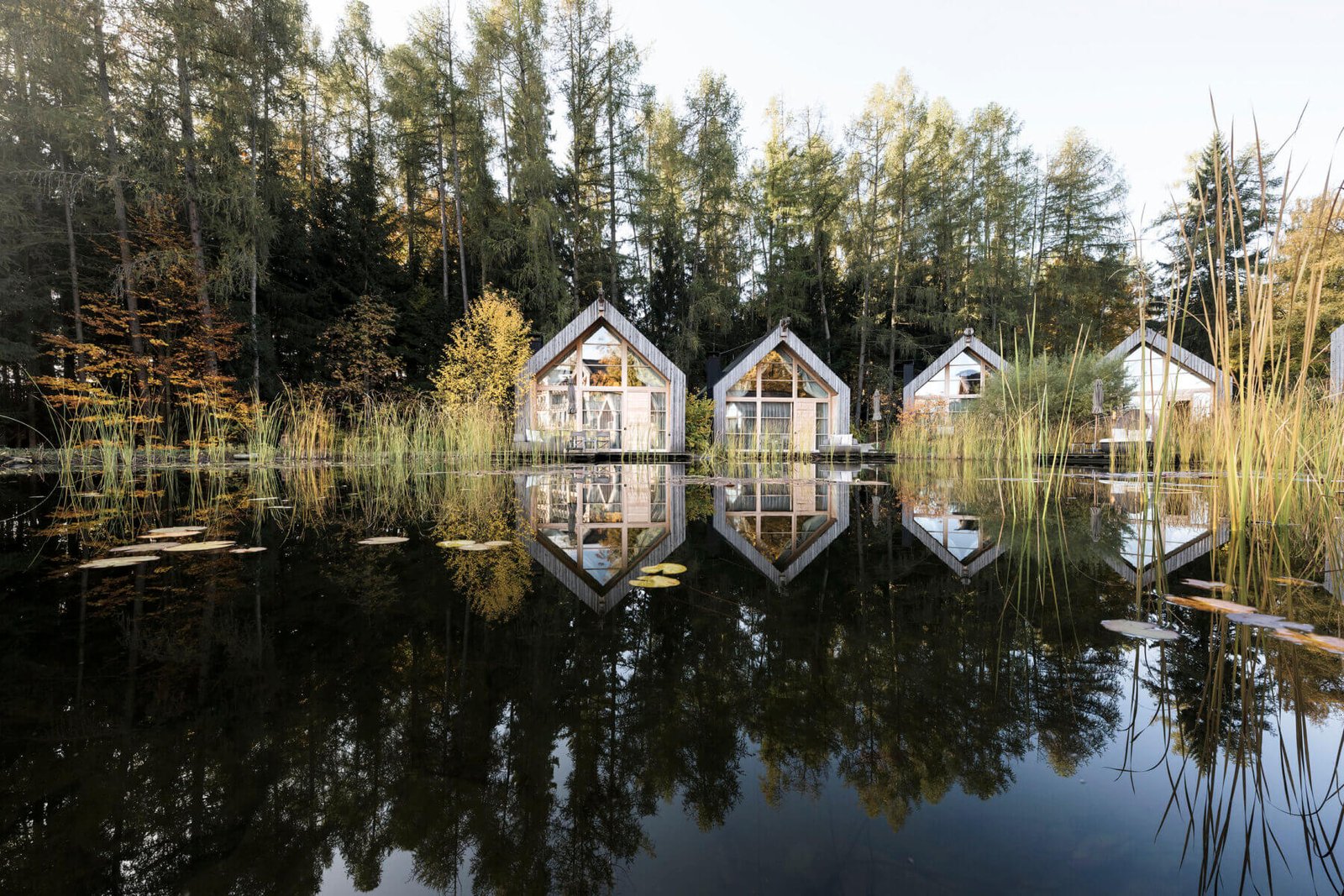
ADLER Lodge RITTEN sits on the Ritten plateau above Bolzano, set within a protected forest clearing in South Tyrol. Arrival is intentionally understated. The approach follows a wooded path before the site opens suddenly onto a wide alpine panorama. Buildings appear at the edge of the clearing, framed by trees and sky. From the outset, the landscape is not a backdrop but the primary organising principle. It is here that the lodge’s guiding premise, “let your soul fly,” takes form through space rather than words.
Part of the ADLER Resorts collection, the lodge resists easy categorisation. Neither a conventional Alpine hotel nor a classic spa resort, it is defined by limited scale, dispersed structures, and a rhythm set by the surrounding environment rather than programmed activity. Formal codes are largely absent. Guests move freely between spaces, pour a glass of wine when they wish, and organise their days without imposed schedules. The atmosphere feels open and unforced, shaped more by place than by protocol.
Staff presence follows the same logic. Uniforms draw quietly on traditional Alpine references without theatrical effect, grounding the experience in regional culture while remaining practical. Service is warm and attentive, paced to match the tempo of the lodge rather than interrupt it.
Spatial Continuity
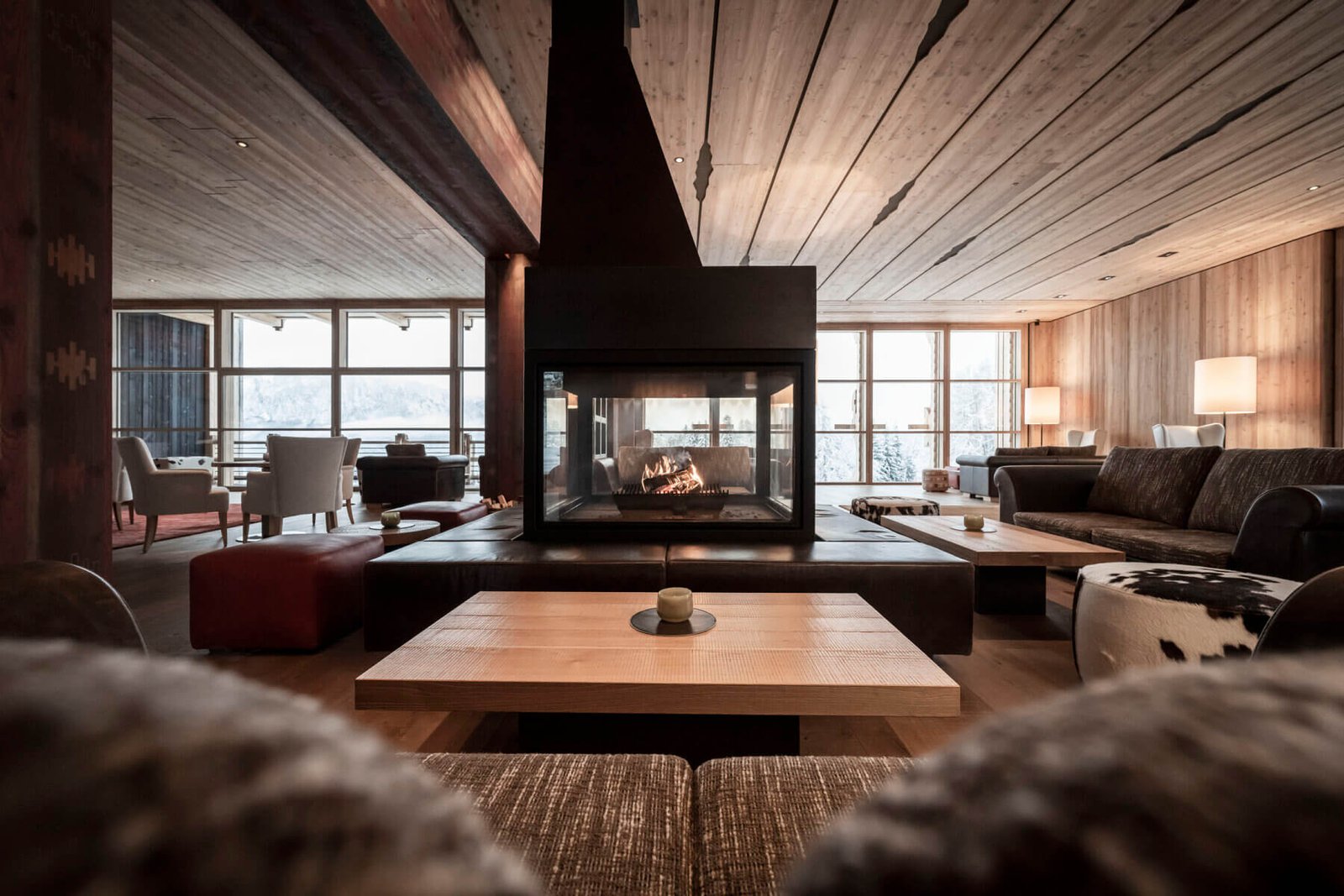
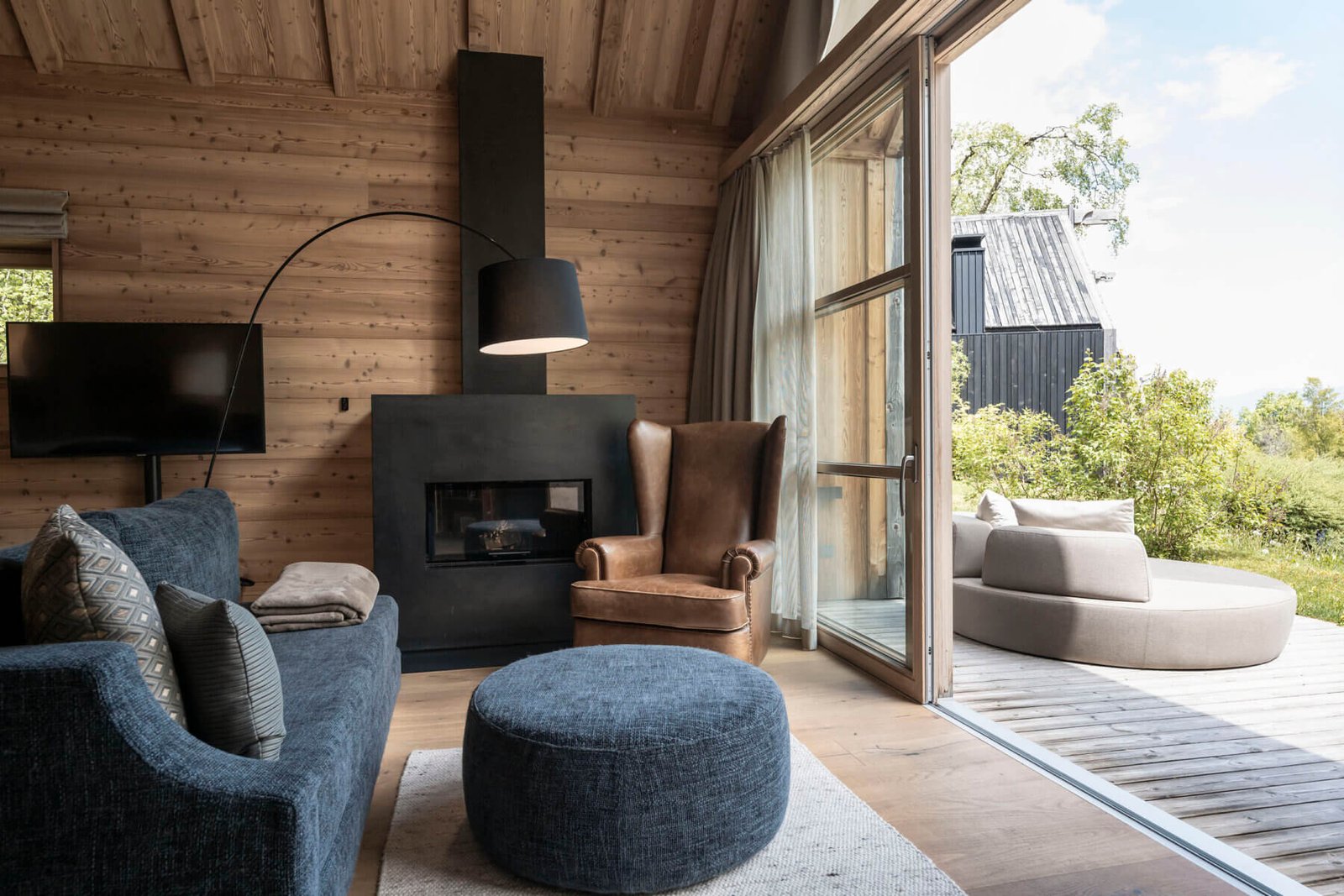
The property is composed of individual chalets and a central lodge building, constructed using locally sourced wood and stone. Architectural language remains consistent throughout. Timber dominates both interior and exterior spaces, creating continuity between built form and forest setting. Glass is used generously but with intention, maintaining constant visual contact with the landscape without overwhelming it.
Interiors favour proportion, light, and material quality over decoration. During the day, natural light enters through large openings, filtered by the tree canopy and shifting mountain weather. After dark, exterior lighting is kept deliberately low. The absence of light pollution reveals star-filled skies with unusual clarity, allowing the forest to retain its nocturnal character.
Nature here is not arranged for effect. The grounds remain largely untouched, allowing wildlife to move freely. Llamas are often visible resting on the grass near the chalets, particularly in the early morning. Their presence feels incidental rather than decorative, reinforcing the sense that the lodge exists within an established ecosystem rather than imposed upon it.
Wellness and the Spa Landscape
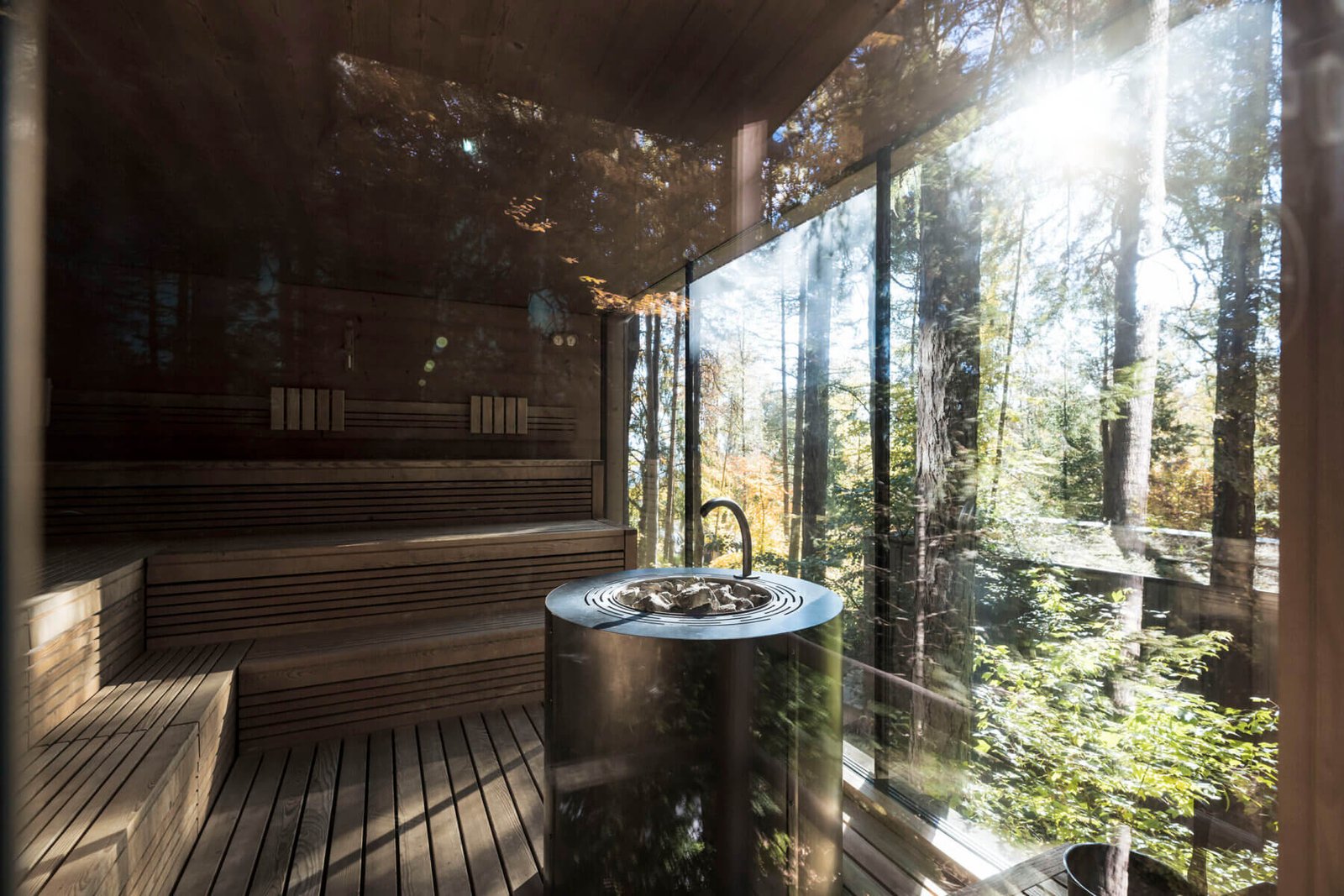
Wellness facilities are distributed across the site rather than concentrated in a single building. Reaching the sauna huts requires a short walk through the forest, making movement itself part of the experience rather than a transition to be shortened.
Each sauna hut is set apart, ensuring privacy and quiet. Construction combines wood and glass with technical precision, while interiors are finished with care and restraint. Large glass panels frame uninterrupted views of woodland and distant mountain ranges. The contrast between interior warmth and alpine air remains gradual, never abrupt.
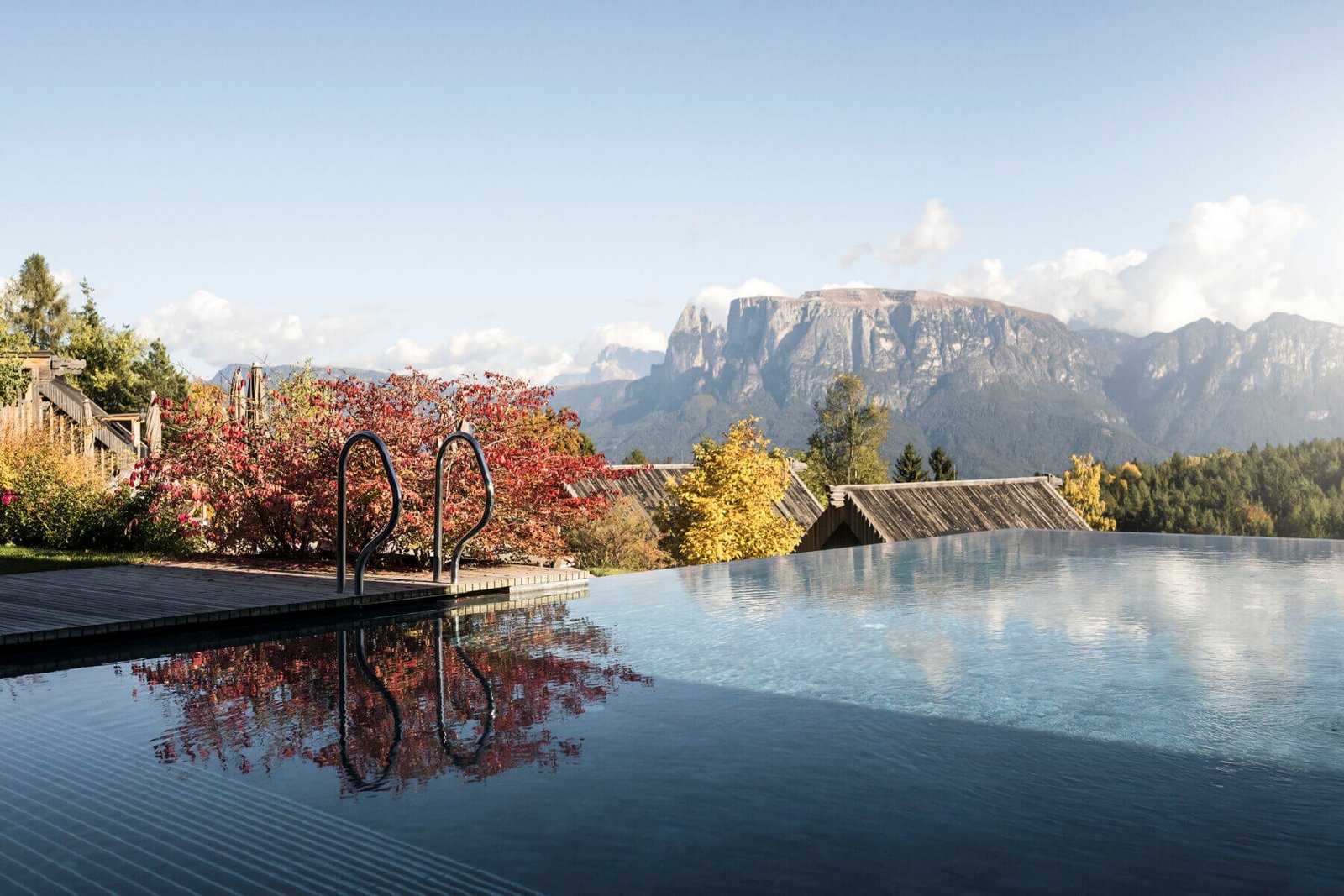
The infinity pool overlooks the surrounding mountains. In the morning, mist rises from the slopes and drifts across the valley as guests float in heated water. Time stretches. The landscape shifts slowly, expanding the visual field and lending the experience a reflective quality.
Movement and stillness are further supported through guided yoga and sound-healing sessions, held in dedicated spaces that maintain a close relationship with the outdoors. These practices extend the lodge’s approach to wellbeing beyond infrastructure, placing emphasis on rhythm, breath, and sensory awareness rather than performance.
Indoor relaxation areas continue this dialogue with the exterior. Boundaries between inside and outside remain clearly defined yet fluid, preserving continuity without dilution.
From Inn to International Collection
The lodge belongs to the ADLER Resorts group, a family-owned hospitality company whose origins date back to 1810. The first establishment, Gasthof zum Adler, began as a small inn and laid the foundations for a multi-generational enterprise.
Expansion unfolded gradually. From South Tyrol, the Sanoner family developed properties in other Italian landscapes, notably Tuscany’s Val d’Orcia and, more recently, Sicily. Each location evolved in close relationship with its surroundings. While the resorts vary in scale and typology, they share a consistent focus on wellness, regional integration, and architectural coherence.
Within this context, ADLER Lodge RITTEN marks a distinct evolution. Compared to the group’s larger spa resorts, it privileges dispersion, quiet, and individual space. The lodge reflects a hospitality model that values autonomy, privacy, and pace, responding to contemporary expectations while maintaining a high level of finish and attention to detail.
Cuisine and Regional Focus
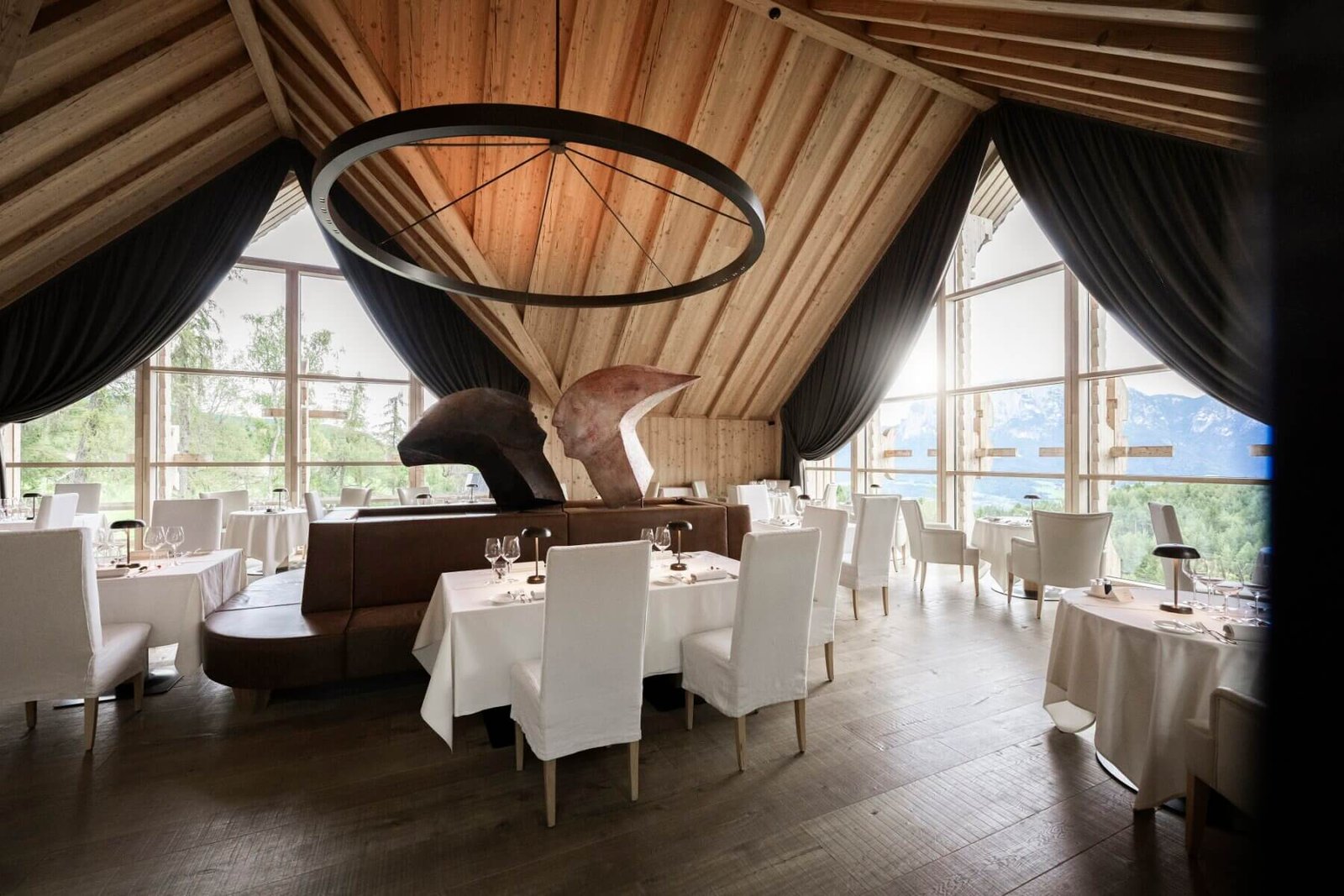
The culinary approach mirrors the architecture and setting: seasonal, regional, and grounded in tradition, with a subtle contemporary sensibility. Ingredients are sourced locally whenever possible, with particular emphasis on South Tyrolean produce and Alpine cooking. Bitter leaves, root vegetables, pumpkins, grains, and apples recur. Techniques favour clarity and balance over embellishment.
Pasta made from locally milled grain forms a central part of the menu. Dishes such as risotto, ravioli, and tagliolini are guided by texture and restraint rather than richness. Desserts follow the same philosophy. Fruit, dairy, and chocolate are handled with a light touch, allowing sweetness to remain measured. A rotating selection of regional cheeses, served simply, offers a final expression of the surrounding landscape.
The wine list remains firmly local, highlighting small South Tyrolean producers and alpine varietals. Pairings are suggested but never imposed, reinforcing a broader approach based on choice rather than prescription.
ADLER Lodge RITTEN offers conditions that allow time to unfold naturally. Forest paths connect spaces, views shift with weather, and interiors remain open to the landscape. A place where comfort, freedom, and space define the experience — and where the forest is never far from view.